Sublime and ridiculous

IMG_8063Without knowing exactly what constitutes cycling utopia it would be foolish to make any claims about getting there. However, the route through the Pamir-Alay Mountains in western Tajikistan is certainly knocking at its door. The largely uneventful days of climbing from the northern city of Khujand and ongoing language battles were spectacularly rewarded by the huge mountain descents and towering gorges that followed. Tajikistan was on fine form.

Take a bow Tajikistan
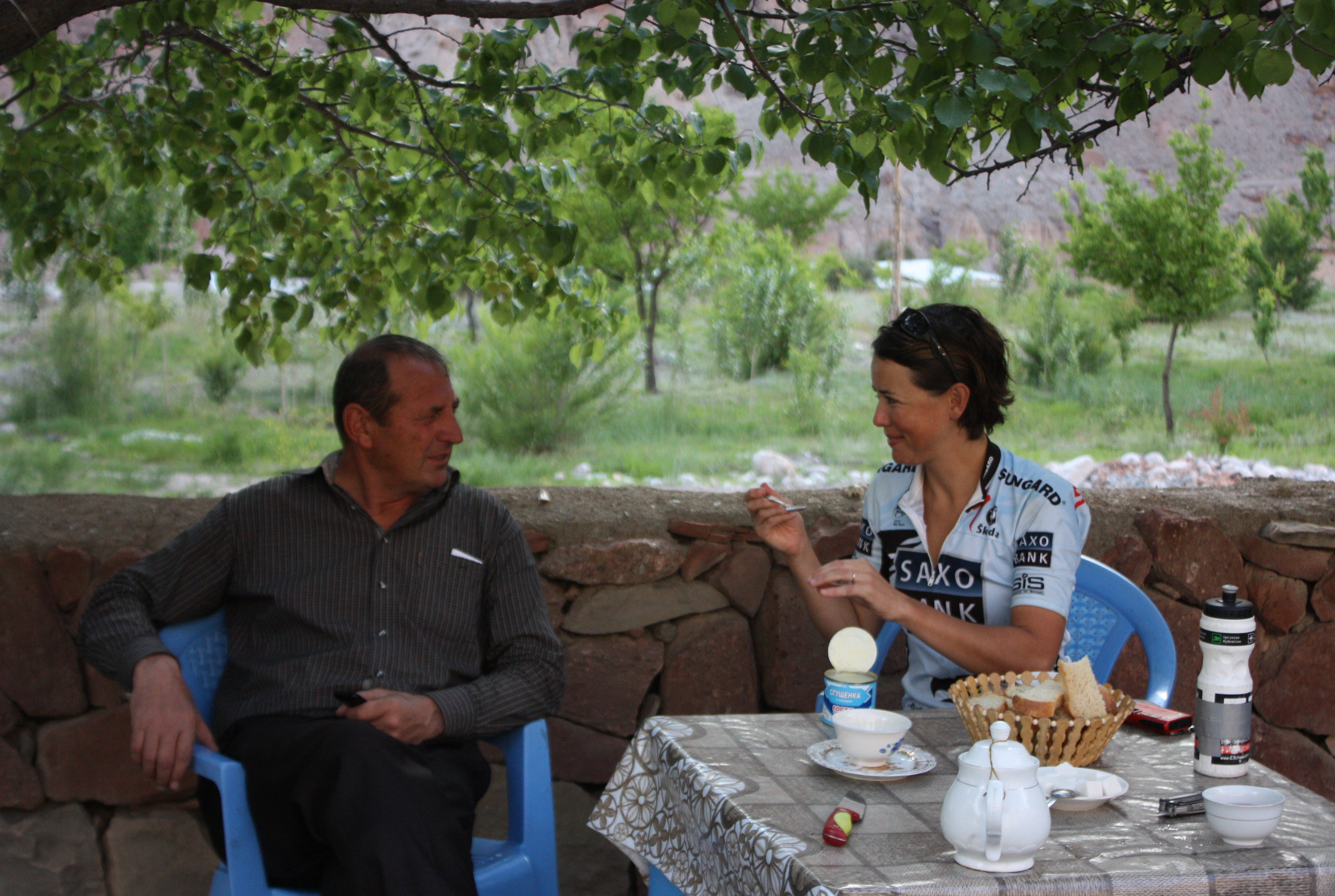
It looks like a conversation, but it’s not.
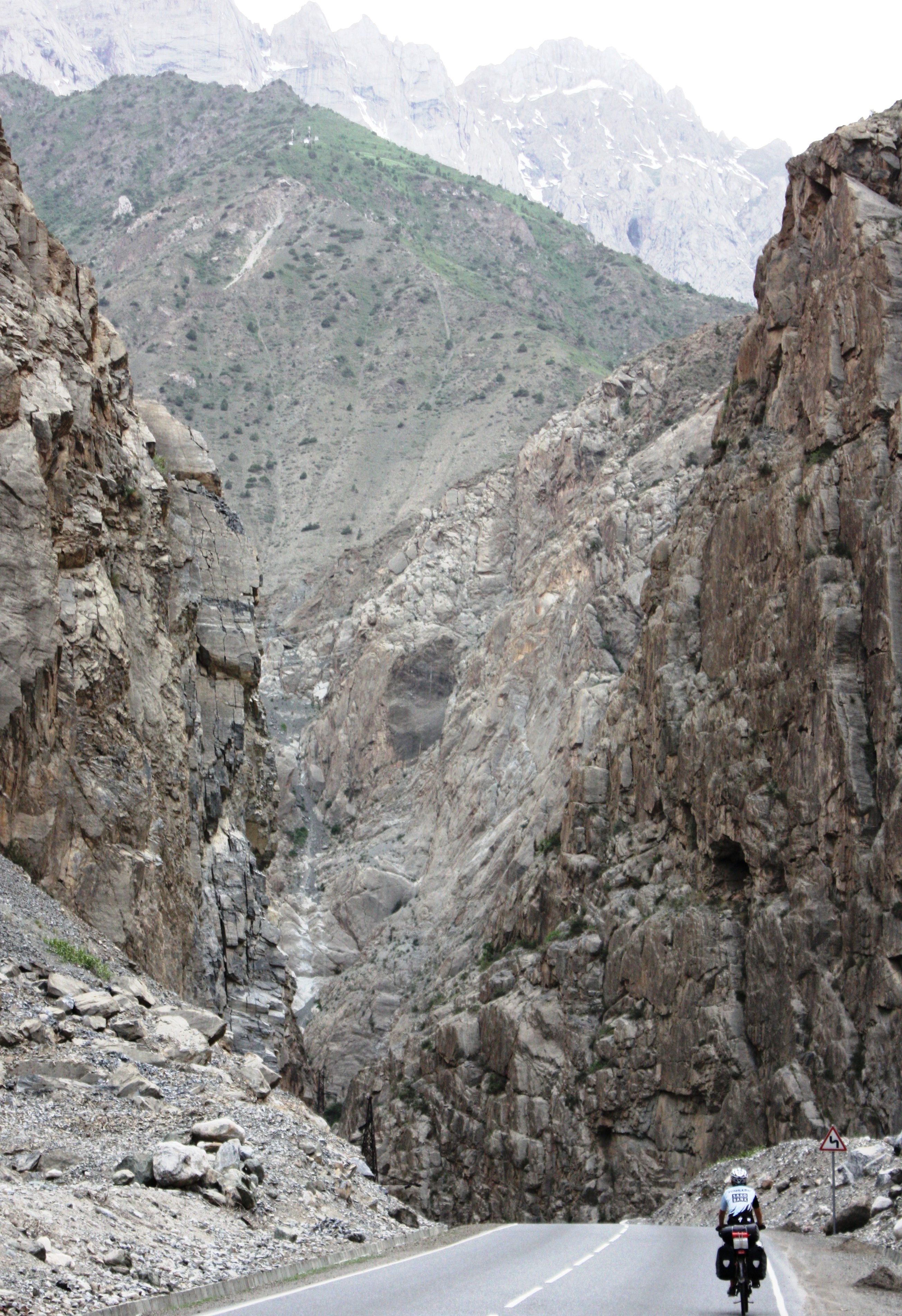
Our finest 30km


Such beauty though clearly comes at a price, and the price for us on this occasion was an entirely dire experience through the poorly constructed Anzob tunnel. It is only around 6km in length and although we were heading predominantly in the favourable downhill direction, it stands out – without exception – as the most unpleasant riding conditions either of us has ever encountered, or in fact can even imagine. The absence of any lighting, frighteningly deep potholes, errant driving, frequent broken rebar and the shin-deep flooding were all fairly inhibiting for a bicycle, but the lack of ventilation and build up of fumes was the real kicker that provided most concern.  A puncture or any type of mechanical issue would have really put us on the back foot, and escaping without either is likely to remain as the kindest fortune of our trip for some time. Once out into the fresh cold air, despite being muddied and just a little shaken by the ordeal, the descent into Dushanbe was a two-hour, free-wheeling, aesthetically pleasing delight.

Thankfully all the events from the past week appear to have counter-balanced each other perfectly and we remain married. Which is positive.
The Enclaves

The international border demarcation in this part of the world is a bit of a mess and not entirely static. One particularly grey area relates to the few parcels of land that Uzbekistan has claimed within Kyrgyzstan borders. These are called the enclaves, and are irritatingly positioned directly between Osh and our only feasible open border crossing into Tajikistan.

Osh hosts: a thoroughly pleasant bunch

Understandably the enclaves are viewed by the Kyrgs with a degree of resentment, but also looked upon as a bit of a challenge to overcome. Our former host in Osh regularly ferries locals toward the border, taking great joy from avoiding the numerous police checkpoints and more importantly, being part of the Kyrgyzstan effort to overcome this irksome intrusion. Before departing, we were informed of the current road layout and how we would avoid entering Uzbek territory; the language barrier was a bit of an obstacle, but thankfully there is a universally recognised charade for ‘do not cross’ and ‘man with gun’. As Omran explained the intricate details of which dirt road to take and which hidden junction to turn down, it felt a little as if we were being briefed by the French Resistance in Nazi-occupied Paris. Briefing over, we left our faultless hosts in Osh and headed for the border town of Batken, although our primary objective  was really avoiding ‘man with gun’.

Enclave negotiation

Despite the deteriorating road surface and the Wacky Races style of driving adopted by the people of this region, good progress was made toward the enclaves through the beautiful Fergana Valley. Whatever reasons are given for the establishment of Uzbek land within Kyrg territory – and the numerous abandoned oil wells en-route gave us some indication – it was certainly not to facilitate cycle touring. The coarse gravel roads have been cut over, rather than between mountains, and do not make for particularly easy cycling terrain. However, one-by-one the enclaves were negotiated and the police checkpoints proved far more welcoming than we had feared.

After a rest day in Batken, which will be remembered as a largely bland town but one in which we were furnished with quite outrageous levels of hospitality, the Monday morning border crossing into Tajikistan passed with relative ease.  The series of oddly placed and remote sheds would have probably been better suited to a garden allotment (as perhaps would some of the occupants of said sheds), but the process was as smooth as we could have hoped for.

Finally, in topographical news: the last 100km into Tajikistan has been almost entirely downhill, which will make for an interesting few days through the central ranges, towards Dushanbe.

Russian roulette

Not exactly roulette in the traditional sense of the Russian game, but waiting in Osh for our various visas and permits for onward travel is turning out to be a bit of a guessing game.

We had heard before arriving that travel through this region is by no means smooth sailing, and so it has already proved. The Tajikistan government is currently battling with quite regular internal violent unrest and as a result, border crossings are closing and mandatory permit stamps are being locked deeply within embassy desks.  Any information information provided is in no way consistent or reliable, and so the 6-day ride to an ‘open’ border crossing would be a costly mistake if Sergei and all his chums decide otherwise on that particular day. Thanks Sergei.

Things could have been very different…

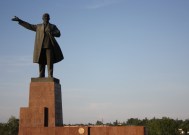
Upon reflection of the planning made for this trip and the issues we have encountered to date, it is becoming apparent that the world is sadly punctuated with many such pockets of unrest, rendering them inaccessible to to anyone who places value on their own life. As the Pamir Highway is looking less likely for us, it joins the Karakoram highway (dissecting the Kashmir/Pakistan melting pot) as a missed opportunity on this occasion. What a terrible shame that the only people able to enjoy these most spectacular regions of the world are those getting very upset at another group of people. An enormous statue of Lenin stands in the centre of Osh; I wonder what he would have made of all this?

In brighter news, the kebabs and beer in this town are plentiful and delicious.

The Russian summer

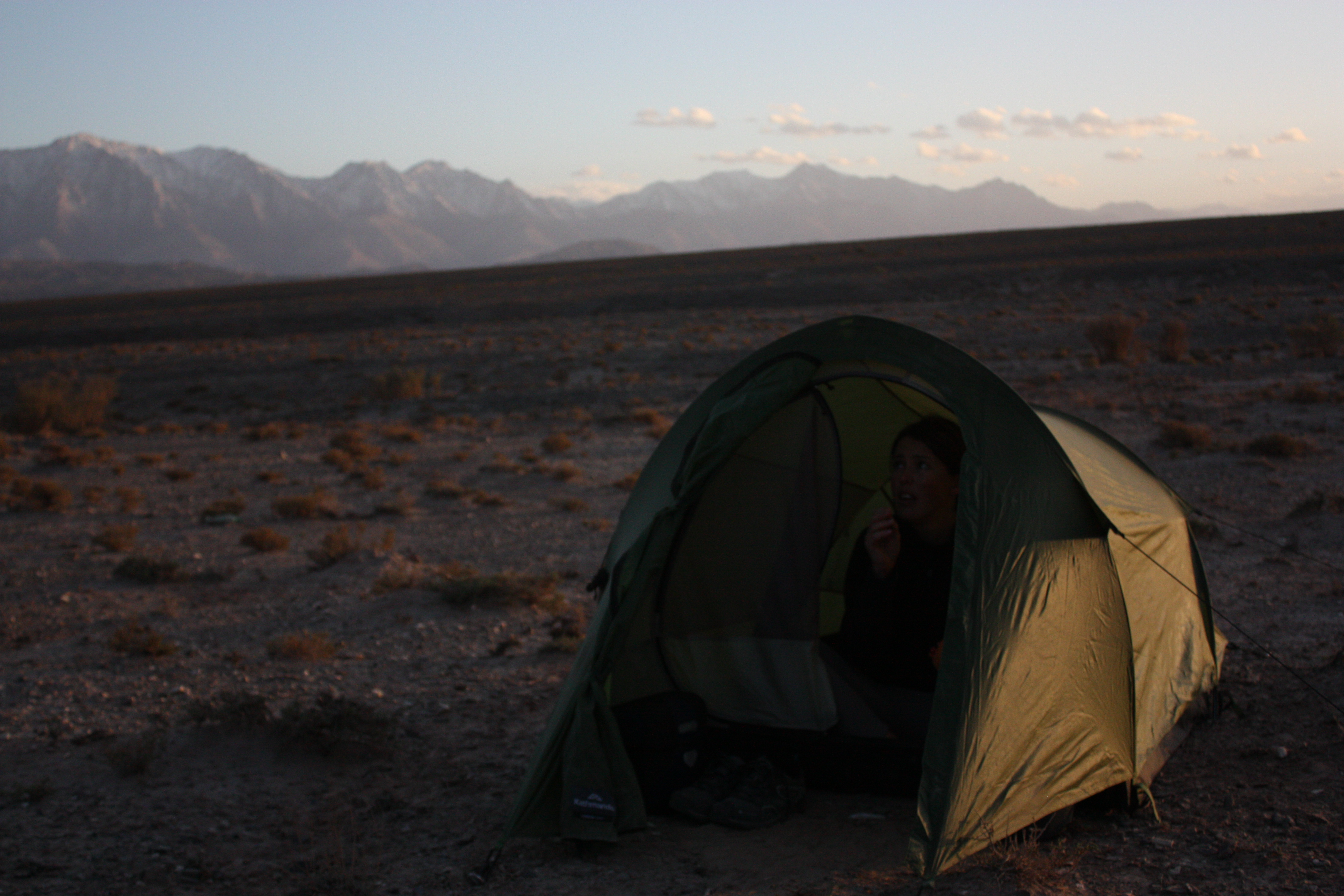
The Kyrgyzstan summer months evidently equate to the temperature edging closer toward zero degrees Celsius, without actually reaching it. And so our lightweight summer sleeping bags and tent were an absolute joy.

Summer in Kyrgyzstan

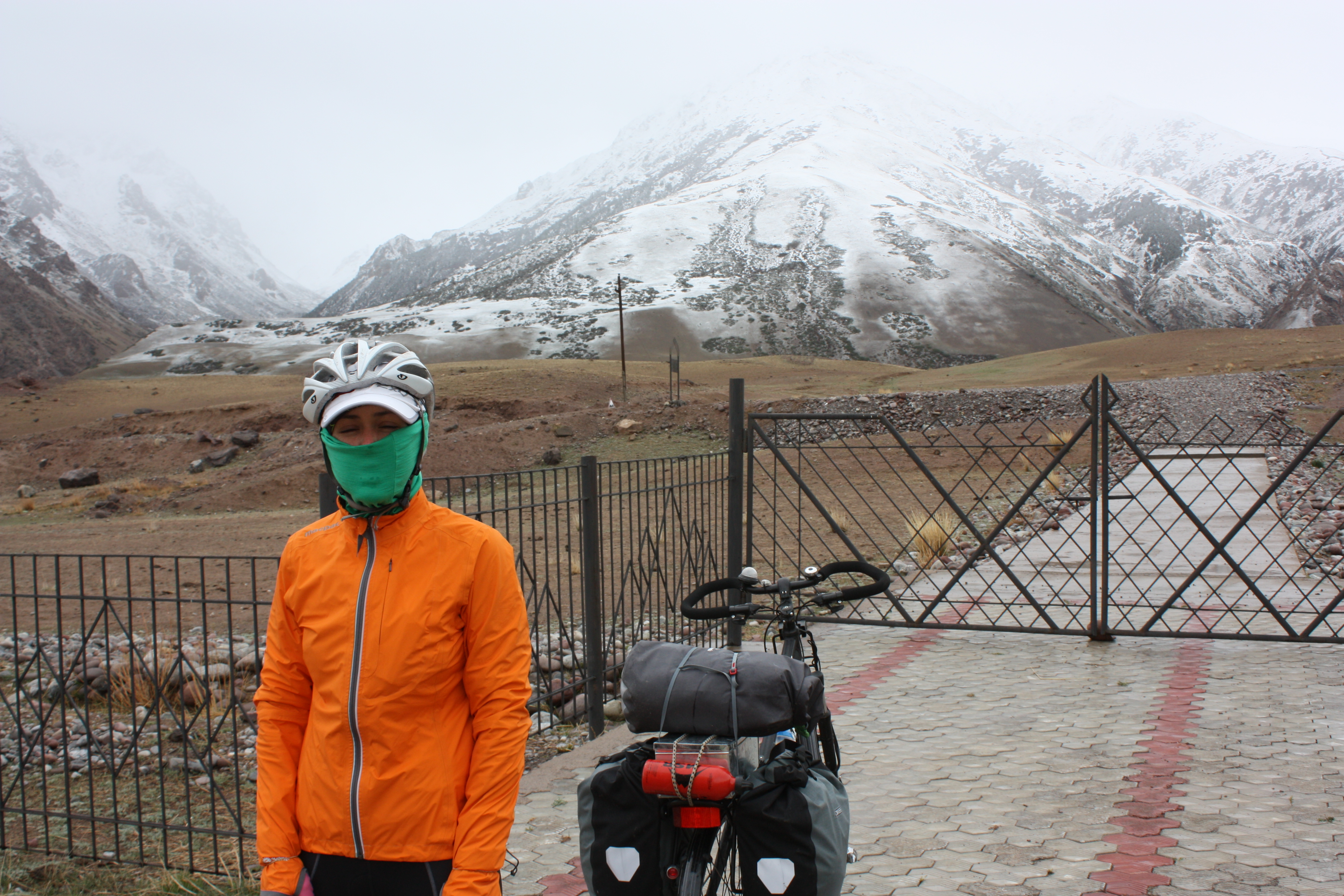
The first night in Kyrgyzstan was spent being rather cold. The two occasions throughout the night spent clearing snow from the tent were worthwhile, but also an indication of things to come.

We waited long enough in the morning for the weather to relent slightly, but not long enough for the Tonmurun pass to become passable. After the well-insulated Russian police at the passport check had told us the pass would not be possible on bicycle, we headed up to corroborate their claims. They were corroborated.

Barely halfway up, and with a ditch in the road as our only realistic option for some respite, a worried but kind Kyrg truck driver named Norlandbek stopped, looked in disgust that a man would treat his wife in such a way, and then placed the bikes into his truck. The snow drifts meant cars were not able to get through, but Norlandbek seemed to take the whole situation in his stride and delivered us safely down the other side.

In summary: don’t come to Kyrgyzstan expecting a summer holiday, unless – like Norlandbek – you are as hard as nails.

To Kyrgyzstan

IMG_7883We set off from Kashgar in high spirits and full of the joys of a Chinese Thursday. But that didn’t last long at all. Our unnecessarily heavy loads,
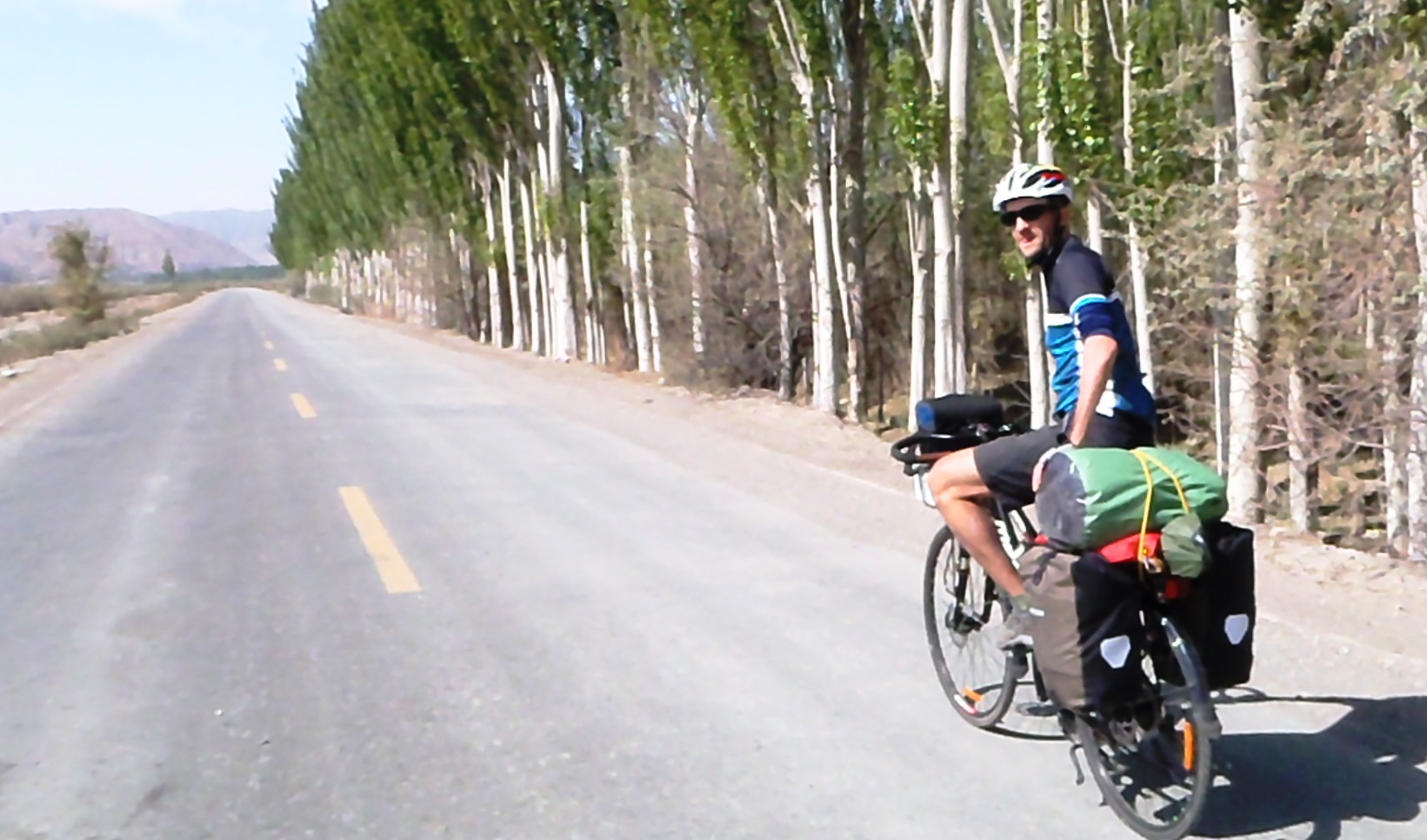
uncomfortable saddles, absolute absence of any fitness whatsoever, our lead-in diet of beer and fried food, the unrelenting incline, headwinds, and the hot dry weather soon dampened any joy of the day. And so we turned back to Kashgar and flew out to southern France, for a year of patisseries and sunshine (at least that was a suggestion floated on Day 1).

OLYMPUS DIGITAL CAMERA

Navigation in the first week was not as straight forward as anticipated. Even between our road map and Garmin Global GPS, the current road layout remained woefully represented. The extraordinary growth and  development in China over the last 20 years has made its way to Western China and as a result, new roads, mine sites, construction projects, and towns are cropping up like daisies in springtime. Unless a bitumen road can be witnessed with your own eyes, it’s existence should be questioned.

The western fringes of China are a fairly barren and inhospitable place. It is a landscape which at no time would have been particularly welcoming, although the ribbon of new tarmac certainly makes life a little easier than it once was.

Through the stunning foothills of the Pamirs, we slowly made our way to the border and after a day layover to attend the customs checkpoint followed by a long cold wait at the Irkeshtam pass, we finally left China toward the former Soviet states. The thorough Kyrgyzstan officials would check our passports on eight separate occasions within a 2km border crossing episode under the guise of official duty, although it appeared that the process was simply to see what we looked like without the assortment of head and face wear protecting us from the elements, and to have a good laugh about the situation. We clearly entertained sufficiently, and were considered suitable for entry.

Touchdown in China. Apparently.

In order to make it to the point where we were able to begin pedalling, we gave up our jobs in Perth, sold our possessions – bar for a small container – and enjoyed a final scenic road trip up the west coast of Australia to Darwin. We enjoyed an interesting 2 weeks holidaying in India; ‘interesting’ due to it being the absolute dichotomy of the conservative Australia we had left behind. A flight across the Himalayas landed us at our starting point: Kashgar, in the Western Chinese Province of Xinjiang.

Cheerio India

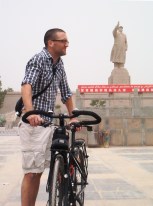
Kashgar lies at a natural intersection of pathways between East and West and is therefore a melting pot of cultures, faces, languages and dwellings, and not at all the China we were expecting. Arab, Persian and Turkic influences are seen throughout the city; all under the watchful eye of a towering statue of Mao Zedong, one of the few left in the country.

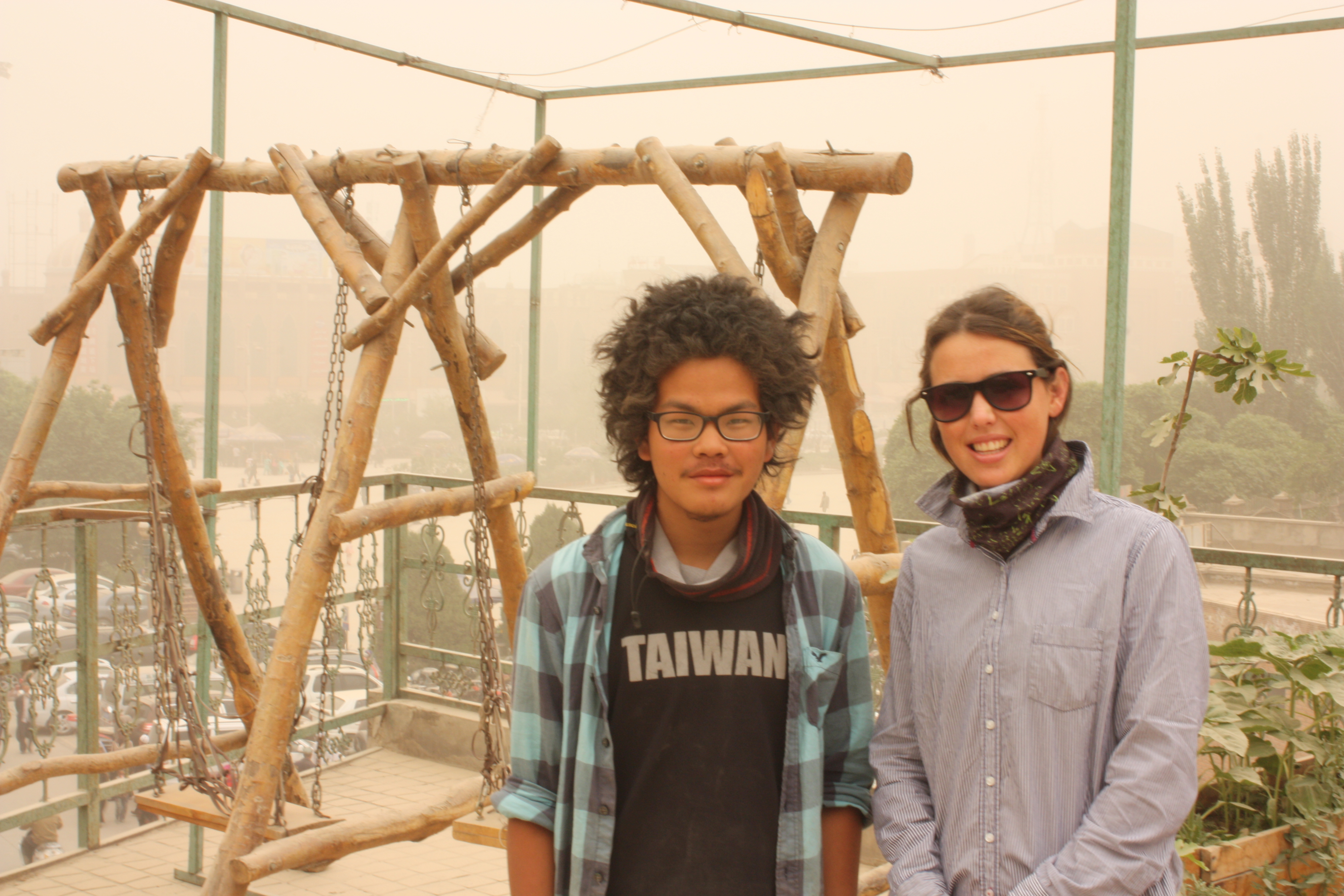
Liang: Taiwanese & proud of it.

The first notable challenge upon arrival into Kashgar is to determine what the time is. China operates on a single time zone, which is odd for a country roughly the size of Australia. As a result, the good people of Kashgar refer to ‘Beijing time’ – which is the actual time – and ‘local time’ being two hours later– which is the time everyone wishes it was (and the time it probably should be). The two terms are frequently interchanged, with no apparent consensus on which time everyone should operate under. The single time zone was a former brainchild of Emperor Mao to create unity within the county, and it would be safe to say that a significant by-product of this unifying initiative has been some pretty tardy meetings and a few missed dentist appointments.

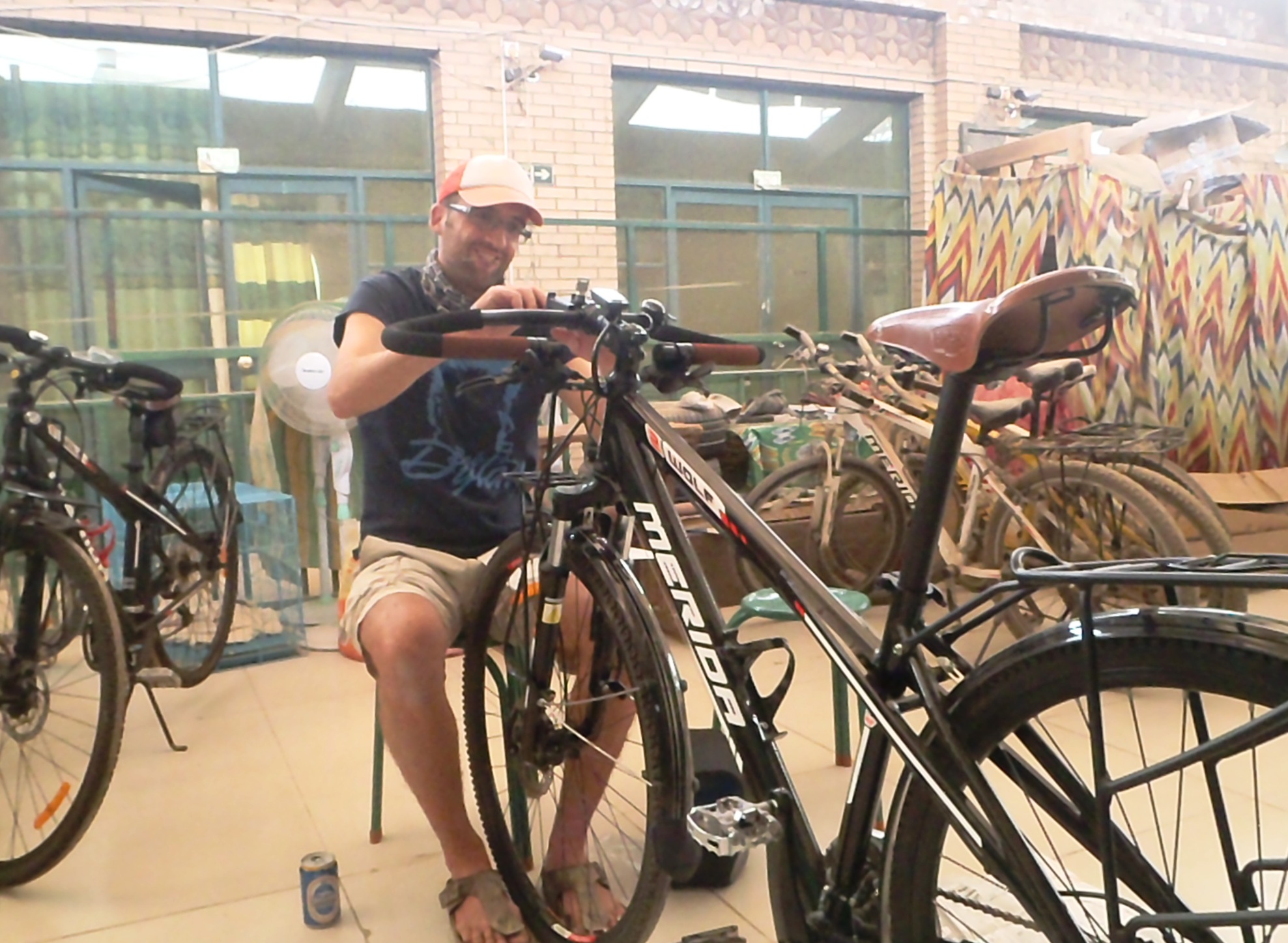
With the help of a Taiwanese chap who’d just ridden solo across from Taiwan, we were able to locate a Merida bike shop shop through a dust storm, from where we bought our touring bikes. Liang proved invaluable as our translator in the bike shops, but more importantly for introducing us to the finest dumpling restaurant in the city (and probably China). The remainder of our time in Kashgar was spent setting up our bikes with the saddles and extras we had brought with us, and ruthlessly reducing our equipment and clothing piles.

If you decided to take a holiday to Kashgar without the intention of tying it in to a cross-continental overland journey, I can only imagine you would be quite disappointed. This is a sprawling, highly populated operational Chinese City, and even the Sunday markets – which are sold as the centrepiece of this town, were certainly u underwhelming. Notwithstanding this, Kashgar served us well. The people at the Pamir Hostel (http://www.pamirhostel.com/en/) were nothing short of excellent and come highly recommended. The food market near the hostel is a worthwhile evening experience, particularly when craving sheep intestines, brains and hooves.