Month: December 2014

Kenyan Driving Lessons

Our entry into Kenya was through the post-apocalyptic border town of Moyale, which provided nothing more than a list of compelling reasons to depart as swiftly as possible. Since beginning this trip we had debated the feasibility of the notorious northern Kenya stretch, as it presented perhaps the most pressing security concerns of anywhere we were planning to ride. We had taken advice from several sources as we neared the border, and after much deliberation we decided not to play our part in that unappealing game of Kidnap & Ransom, and instead, take a bus from Moyale to Isiolo. Given the information we received and the considerable military presence we observed en route, there is either a very tangible threat in this region, or a very paranoid Kenyan State. In the end it was an easy decision.
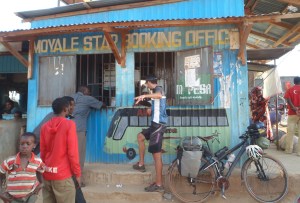
First stop in Moyale: our ticket out.

Upon reflection however, it may have indeed been preferable to take our chances with the bandits and negotiate our own ransom, given the moderately terrifying experience delivered by our Kenyan bus driver. At the beginning of the journey our biggest concern was whether our bikes would survive the bumpy ride in one piece. Upon arrival in Isiolo though, we were simply pleased to be stepping off at our intended destination. If you ever find yourself needing to make this journey, there is almost certainly a more desirable alternative than the lunatic drivers that operate this route.
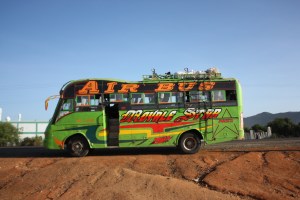
Don’t even think about it….

Once back on the bikes and making our way up the foothills of the beautiful Mount Kenya, it was easy to see why this place was the former jewel of British colonisation efforts in Africa. It also felt as though we had finally left behind Northern Africa and crossed a frontier into a very different part of the continent; with conveniences and language no longer such a challenge, and where we were relieved to be generating far less attention as we rolled through each village.
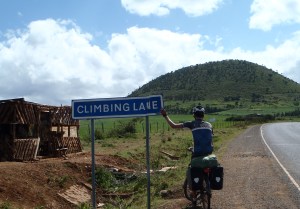
Pre-accident foothills of Mount Kenya.
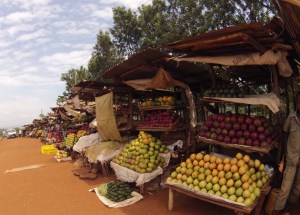
The fresh fruit is plentiful and delicious.
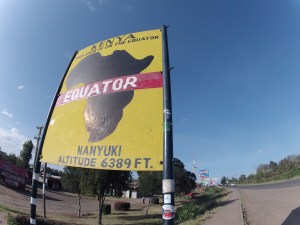
We finally crossed it.

However, things didn’t improve much on the road. Within the first forty Kenyan kilometres, a particularly impatient and incompetent driver decided that my panniers would look better on the roadside, and my front wheel would work better shaped like a pretzel. After knocking half the peloton onto the verge, he fled the scene immediately (like the gracious gentleman he surely was), leaving behind a shaken rider, an unrideable bike, and equipment in need of some considerable duct tape attention. This was a low point.

In the aftermath of the incident however, as irritated as we were by the clown behind the wheel (of the black Probox, registration KBR115M), we were equally overwhelmed by the kindness of Kenyan locals who represented the antithesis of the moronic driver. Most notably, was the outrageously efficient Victor Mbuthia, who took it upon himself to collect the fractured wheel rim from us and return it as-good-as-new within a couple of hours – and this, in a town where the technical section of the bike shop stocked only baskets and bells. What’s more, Victor then took us on a cycle tour of the Mount Kenya Game Ranch to showcase the region’s highlights; Africa’s second highest peak and its abundant wildlife. Should you ever visit this region, Victor runs bicycle safaris around Mount Kenya, and if our experience with him is anything to go by, they’ll be a well-oiled and worthwhile outing.
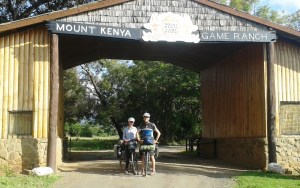
Mount Kenya Game Ranch.
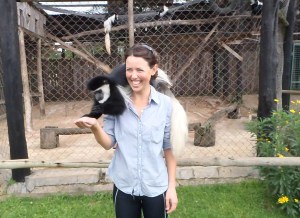
Cheeky…black & white Colobus.

We made our way from Mount Kenya to the chaotic sprawl of Nairobi – a city in that would test even the most hardened urban cyclist – where we were fortunate enough to spend Christmas with our friends Jon & Jude, who provided a much needed recuperation for our bodies and bikes; which seemed to be broken in equal measure.
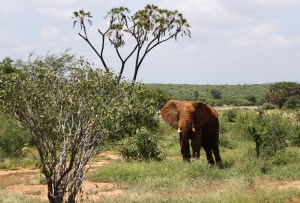
A Christmas Day detour to Tsavo National Park with our hosts.
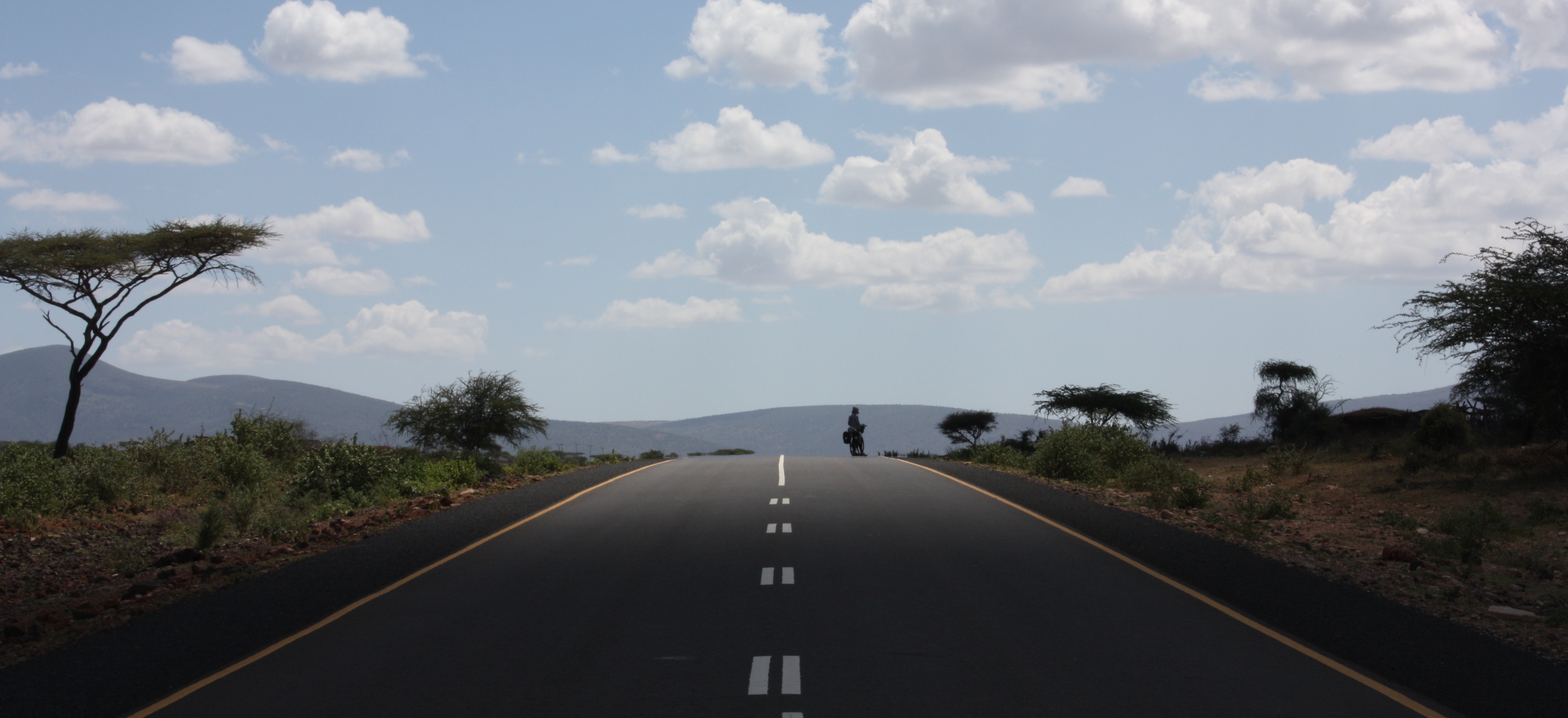
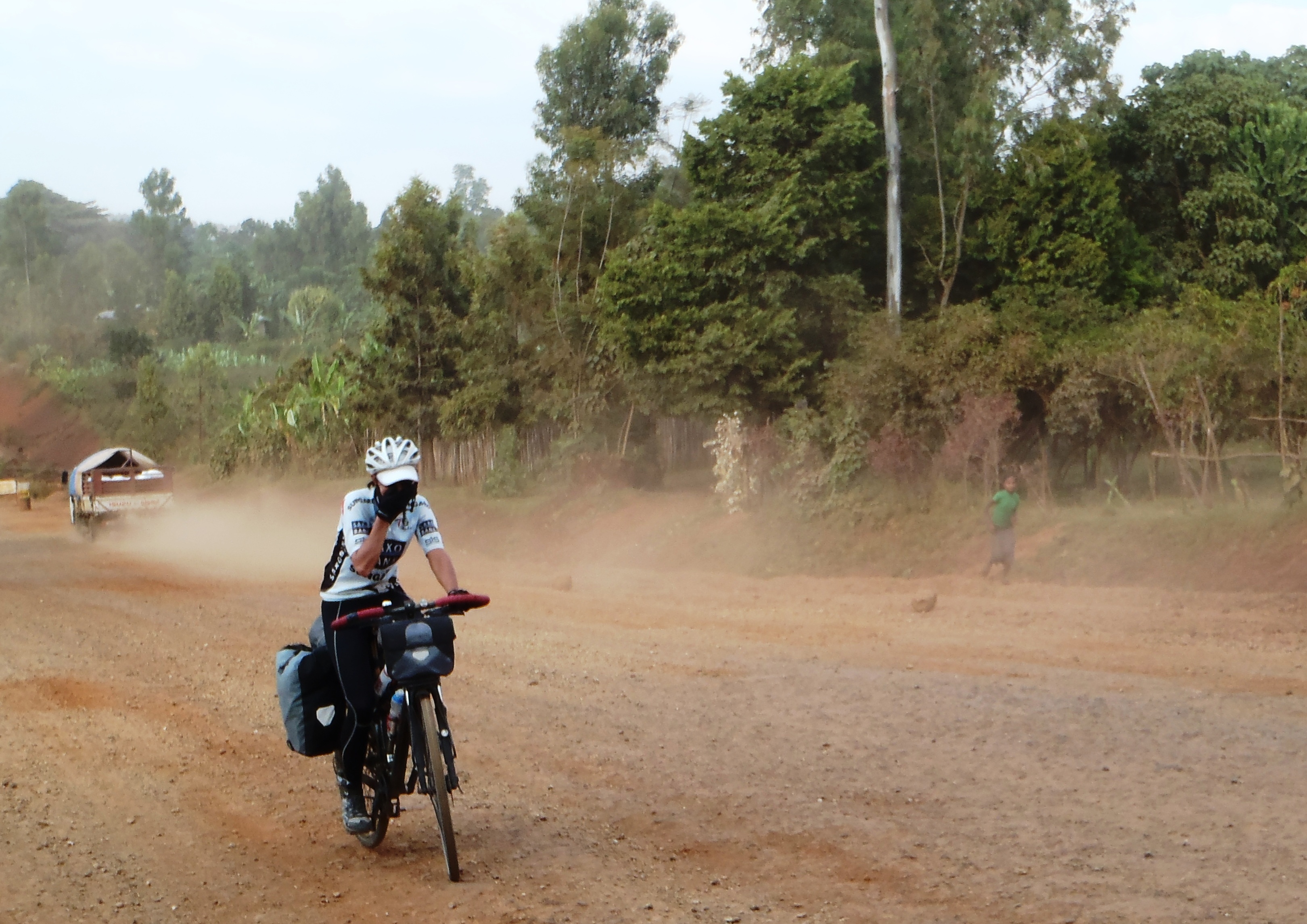
Hard yards for everyone

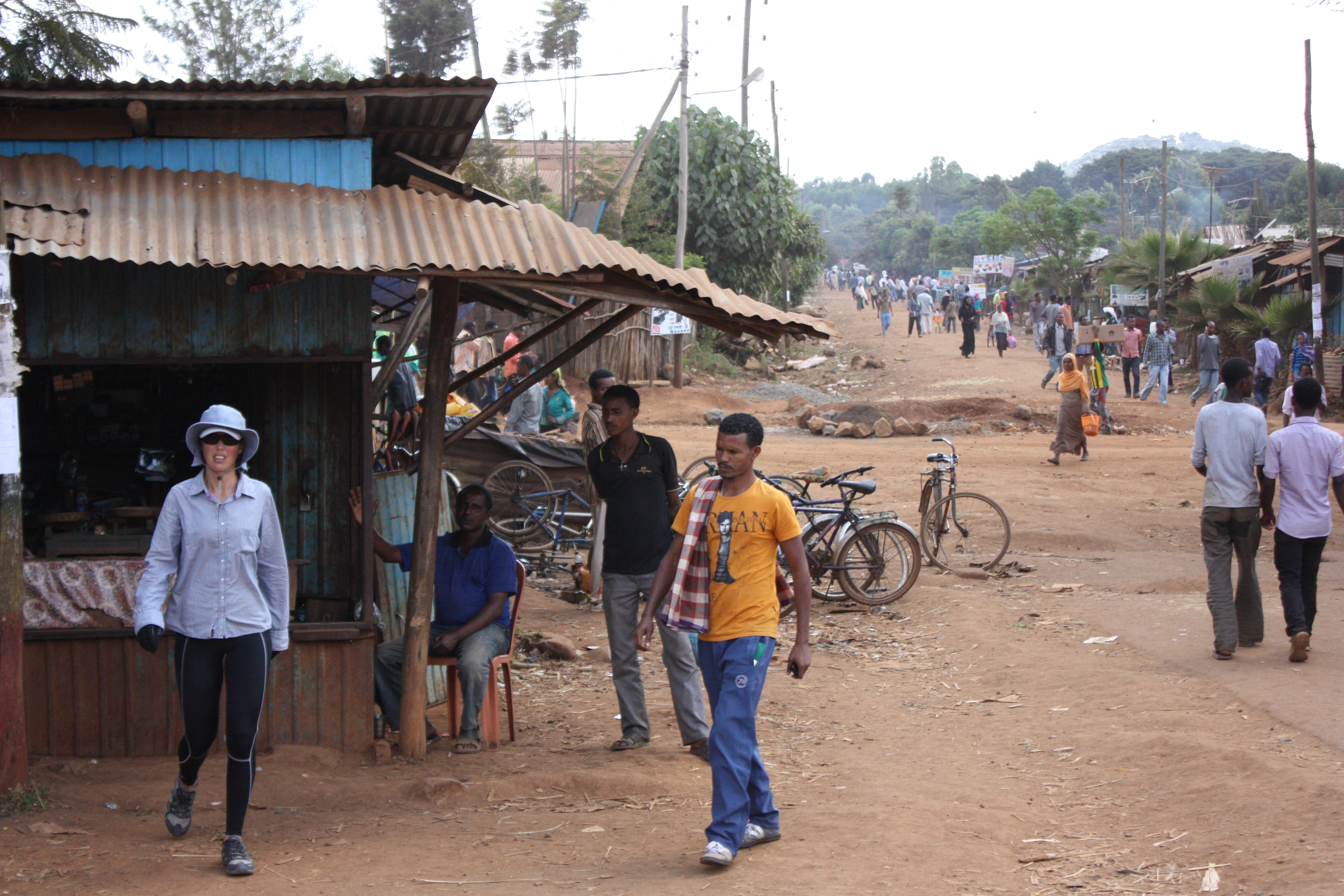
The southern third of Ethiopia wasn’t particularly easy going for us; the roads deteriorated into a dusty mess, the terrain remained high and hilly, and the lively locals somehow became even more boisterous than those in the north. All combined to serve up some challenging conditions which would result in our longest and hungriest days in the saddle – with the 200km either side of the town of Dila thoroughly testing not only our mental reserve, but also our tolerance for dust inhalation. However, as we grinded through the final few hundred kilometres of what has been a fascinating country, some of the hardships we saw along the way gave us plenty of food for thought.

Dusty times…

….and long days.

The team mechanic’ll sort that…

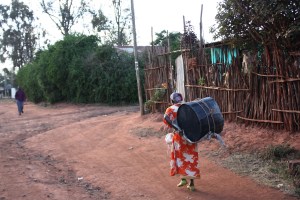
Evidently, the need to carry huge drums of water for great distances is indiscriminate of age or gender in Ethiopia; as we saw terrific volumes being carried by a full spectrum of society – either on heads, on backs, or by any means possible. One of the most notable sights however, was an elderly woman walking barefoot between villages with a single microwave-sized rock tied to her back. The whole process looked excruciating and was no doubt a fairly thankless task. However, she was at least able to reward herself – after a level of physical exertion well beyond this particular duo – with a refreshing mouthful of brown, turbid water.

That’s not full of feathers.

Certainly, cycling long distances across continents has been difficult, and for us, Ethiopia has raised the difficulty-rating of this particular trip. However, the hardships we have witnessed along this route helped highlight to us what seems to be a very western interpretation of that word: hard. Think you’ve got it tough? Try filling your microwave with concrete, hoisting it onto your back and carrying to the town down the road. Then repeat until nightfall.

Ethiopia is a country of quite exceptional beauty, and its position at the heart of Africa’s Rift Valley helps it boast landscapes that would be the draw card of any nation on earth. Its food is unique, its coffee a world-beater, and its people (at least those who are not throwing things) are a well-meaning, generous bunch.  Its flaws though are not trivial, and it certainly seems that there is plenty of work to do here – with the first cab off the rank surely being an attempt to curb this incessant population growth.

Ethiopia has been an aesthetic win.

Phonetics: works in any language.


Highs and lows

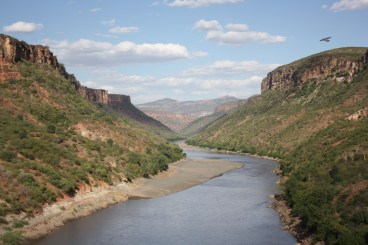
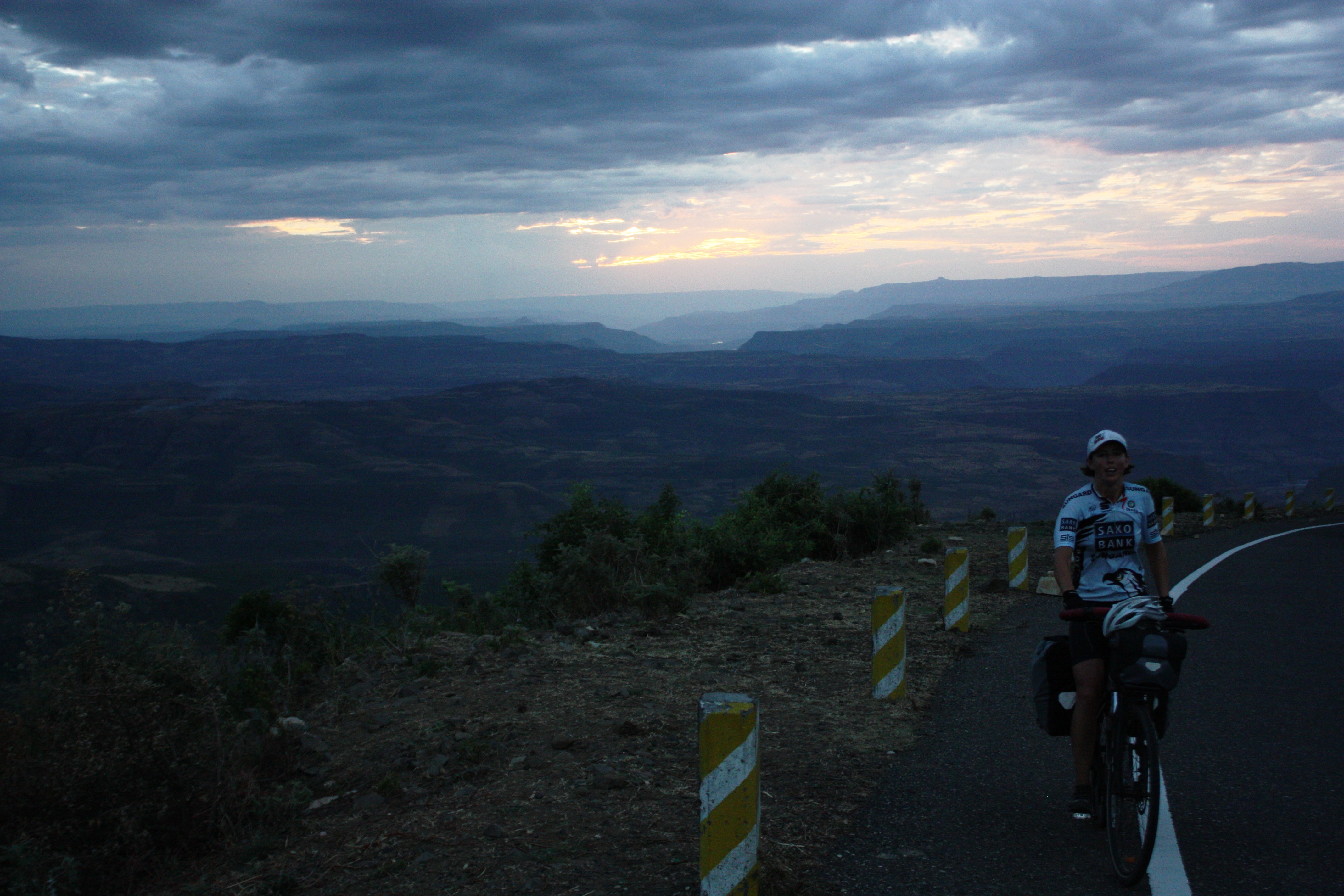
Ethiopia is proving to be quite a surprise package for cycling, just so long as you’re not one to shy away from the odd hill climb. Each day we find ourselves riding through some spectacular landscapes which could easily be mistaken for the Swiss Alps or Grand Canyon. Most notably, the magnificent 40km stretch through Abay Gorge deserves individual praise and falls easily into the top five days of our entire trip (well, the descent certainly does, the severe three-hour climb out left us wondering whether it was indeed worth it). Interestingly, this area has also provided some of the oldest ever fossilised human remains; apparently some folks were knocking around here about 3 million years ago, so the natural beauty of this place is not exactly breaking news.

Abay Gorge, photo taken after and before a 20km descent/climb.

A slow climb out of the gorge.

Our second noteworthy observation of this county is the quite massive and conspicuous population – if ever a market for promoting the benefits of birth control existed, then Ethiopia is most definitely it. The number of people we see every day is staggering, and the proportion under the age of ten has to be seen to be believed. We were fortunate enough to share an evening meal with a chap named Sisay, who – when not being a charming and hospitable Ethiopian – spends his time running clinics in rural villages to educate on this very issue, and he enlightened us further on the scale of the problem they are facing.

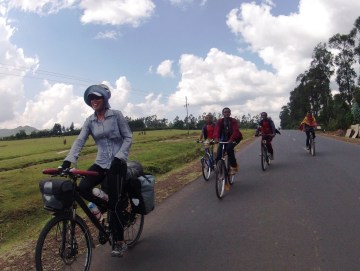
The peloton regroups.

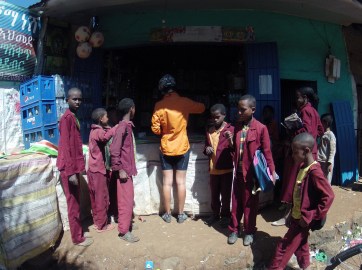
Resupplying , with company.

For now though, the long periods of solitude to which we have become accustomed are a distant memory, as we find it difficult to recall a continuous stretch of five kilometres since entering Ethiopia without passing an unnamed village or encountering at least a group of people. Unfortunately, a few of the local kids find throwing stones at passing cyclists to be a jolly good jape, and while this is a bit of an annoyance, it’s a manageable one.

This country has perhaps provided the most eventful riding days of our trip so far, though certainly not the easiest. However – and quite crucially – the unexpected pleasure of Ethiopian coffee has so far got us through intact.

Late finish.

In search of a lunch stop.

We have also enjoyed a full compliment of weather in Ethiopia.